The post How to Build a Yard That Helps Monarchs During Spring Migration appeared first on A-Z Animals.
Quick Take
Monarch butterflies are the only known butterflies to embark on a two-way migration.
You can help support the monarch butterfly’s migration by creating nectar corridors in your yard.
One of the most important plants for monarchs is the native milkweed, as it is their host plant.
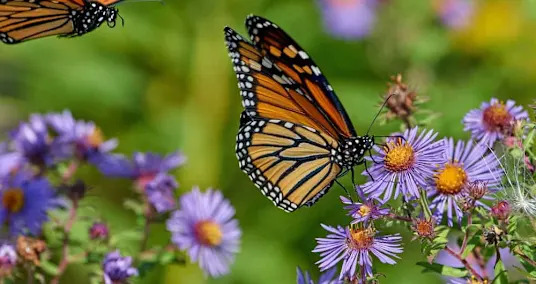
Did you know that monarch butterflies are the only butterflies known to make a two-way migration like birds? That’s right: according to the US Forest Service, monarchs in Eastern North America migrate south for the winter, often to Mexico.
When monarch butterflies make their journey back north during spring, they rely on nectar sources and milkweed for survival and reproduction. Looking to support migrating monarchs in your state? Here are some practical steps to take this spring.
Plant Native Milkweed
Native milkweed is the only host plant for monarch larvae, making them crucial for a healthy butterfly migration.
“If you want butterflies, namely monarchs, you can’t plant just pretty flowers,” says Nicole Carpenter, a pest control professional and the President at Black Pest Prevention, a local Charlotte (NC) pest control company. “You should plant what they actually use … Monarchs lay eggs only on milkweed, so plant native milkweed like swamp milkweed or butterfly weed in a sunny spot and let it grow a bit wild,” she says.

Monarchs rely on milkweed for survival.
©Rene Bechard/Shutterstock.com
(Rene Bechard/Shutterstock.com)However, she recommends avoiding tropical milkweed. According to The Xerces Society for Invertebrate Conservation, tropical milkweed (Asclepias curassavica) is a non-native milkweed. In temperate environments, it does not die back during winter, which can disrupt migration patterns and lead to high levels of the deadly OE parasite.
Stick to native milkweed, like common milkweed and swamp milkweed. Native milkweed dies back in the winter, killing off the OE parasite and supporting monarch migration.
Monarchs lay eggs only on milkweed, so plant native milkweed like swamp milkweed or butterfly weed in a sunny spot and let it grow a bit wild.
Nicole Carpenter, a pest control professional and President of Black Pest Prevention, a Charlotte, NC pest control company
Build Nectar Corridors
In addition to milkweed, also provide flowering, pollinator-friendly plants for the butterflies.
“It’s crucial to add nectar plants around milkweed—coneflowers, black-eyed Susans, bee balm, and goldenrod work well,” Carpenter explains. “The closer they all are to each other, the better, because this is how butterflies can find them easily.”
This creates what is known as a nectar corridor.
“Building a yard with a few milkweed plants plus some flowering native [plants] helps monarchs during migration, especially in spring,” Carpenter continues. “When they’re moving north, they need places to stop, feed, and lay eggs, and most suburban yards don’t offer that anymore.”
Avoid Pesticide Use
While it might be tempting to use pesticides on your plants, doing so can harm monarch larvae and deter butterflies.

Pesticides will likely deter monarchs from your nectar corridors.
©Savanevich Viktar/Shutterstock.com
(Savanevich Viktar/Shutterstock.com)“Keep in mind that even ‘pollinator-friendly’ pesticides kill caterpillars and do not let them become butterflies,” says Carpenter. “Your main goal is to actually help them continue their life cycle, which is only possible if there’s milkweed they can lay eggs on, no pesticides, and some flowers nearby that give them nectar to feed the next stage.”
The post How to Build a Yard That Helps Monarchs During Spring Migration appeared first on A-Z Animals.
latest_posts
- 1
 Instructions to Keep up with Your Traded Teeth for Life span
 - 2WHO issues guidance on GLP-1 drugs for obesity
- 3This Unique National Park In Canada Is Famous For Its Otherworldly Limestone Monoliths
- 4New hybrid mpox strain discovered in UK after US reports local spread
- 5Top Frozen yogurt Flavor: Cast Your Vote!


- 6 Eyewear Brands Worth Purchasing
- Astronomers now say the moon is eating up molecules from Earth’s atmosphere
- 8 key takeaways from Savannah Guthrie's 'Today' interview on the disappearance of her mother
- I’m a doctor. Here are 10 science-backed tips to help you get healthier.
- Figure out how to Separate Among Fledgling and Master Fender bender Legal counselors
- Monetary Versatility: Get ready for Life's Unforeseen Difficulties
- How food assistance programs can feed families and nourish their dignity
- Role reversal: Ukraine moves training home and exports the lessons abroad
- Israeli military says it hit dozens of military facilities in Tehran