When you buy through links on our articles, Future and its syndication partners may earn a commission.

The first test flight of Landspace's Zhuque-3 rocket ended in a fiery explosion after successfully reaching orbit.
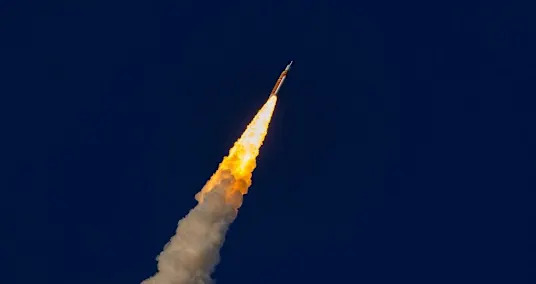
Chinese company Landspace launched its 216-foot (66-meter) stainless steel Zhuque-3 rocket from the Jiuquan Satellite Launch Center in the Gobi Desert in northern China on Tuesday (Dec. 2). The reusable, methane-liquid-oxygen-powered rocket successfully placed its expendable second stage in orbit, according to a statement from Landspace.
But after making a successful reentry, the rocket's first stage booster appeared to lose an engine during its landing burn and catch fire before crashing into the ground in a spectacular explosion. "An anomaly occurred as the first stage approached the designated recovery zone. No personnel safety issues occurred," Landspace wrote on social media. The company is now investigating the anomaly to discover its root cause.
Despite the landing failure, Landspace is hailing the test flight as a success, adding in its social media post that "China's first rocket recovery attempt achieved its expected technical objectives." These include verifying Zhuque-3's recovery system, engine throttling, and attitude control. Stills from videos of the crash landing show that the first stage landed within just meters of its target landing zone.
Zhuque-3 resembles SpaceX's dependable Falcon 9 rocket; both rockets feature a reusable first stage and an expendable upper stage and are powered by nine engines.
Zhuque-3's Tianque-12A engines are powered by a mixture of liquid methane and liquid oxygen (methalox), however, while the Falcon 9's Merlin engines burn liquid oxygen and rocket-grade kerosene.
Zhuque-3's payload capacity is similar to Falcon 9's as well, able to loft 40,350 pounds (18,300 kilograms) to low Earth orbit (LEO). Falcon 9, meanwhile, can send 50,265 pounds (22,800 kg) to LEO.
A Landspace previous rocket, Zhuque-2, became the world's first methane-powered rocket to reach orbit in July 2023. SpaceX's Raptor engine, which powers its Super Heavy booster and its Starship second stage vehicle, also burns liquid methane and liquid oxygen.
The Zhuque rockets are named for the vermillion bird from Chinese mythology that represents the fire element in Taoist five-element cosmological system.
latest_posts
- 1
 Vote in favor of Your #1 BWM Vehicles
 - 2Kids may be more likely to get the new ‘Cicada’ variant of Covid-19, scientists say. Here’s what to know about BA.3.2
- 3Surveys of Thrillers That Re-imagined the Class
- 4Ancient fire discovery marks significant milestone in human history
- 5Figure out How to Introduce Sunlight powered chargers on Your Rooftop securely




- Check out the exclusive pitch deck Valerie Health used to raise $30 million from Redpoint Ventures to automate healthcare faxes
- Startled Venezuelans express relief but also fear after Maduro arrest
- Air travelers face higher ticket prices as Iran war drives up oil prices
- Lucky airplane passengers capture NASA's Artemis 2 moon launch from the sky
- China and Pakistan issue five-point peace plan for Middle East
- 4 Dazzling And Well known Island Objections In US
- Watch Chinese astronauts enjoy '1st ever space BBQ' from Tiangong's brand-new oven (video)
- Mysterious bright blue cosmic blasts triggered by black holes shredding stars, scientists say. 'It's definitely not just an exploding star.'
- Nitty gritty Manual for Picking Agreeable Tennis shoes