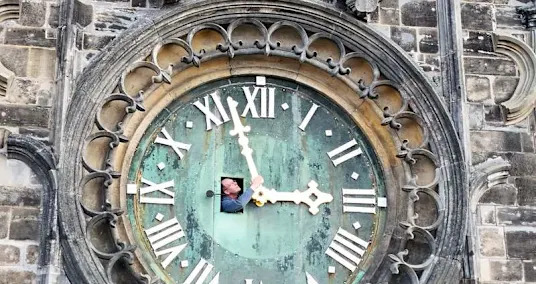
Clocks across the majority of European countries are set to go forward by one hour early on Sunday as the continent moves to daylight saving time, also known as summer time.
Clocks in most European nations including Germany advance by one hour at 2 am (0100 GMT) to 3 am, heralding longer evenings and brighter days.
This means that for the coming months parts of Europe will be on Central European Summer Time (CEST), before moving back to Central European Time (CET) in the autumn, when clocks go back again by an hour on October 25.
The aim of the change is to make better use of daylight in the shorter days of the winter in the northern hemisphere.
The signal for the automatic changeover of the clocks in Germany comes from the Federal Institute of Physics and Metrology (PTB) in the northern city of Braunschweig, also known as Brunswick in English.
The institute's experts ensure that radio-controlled clocks, station clocks and many industrial clocks are supplied with the signal via a long-wave transmitter called DCF77 in Mainflingen near Frankfurt.
latest_posts
- 1
 4K televisions for Extreme Film Watching Experience
 - 2Excelling at Cash The board: A Manual for Monetary Essentials
- 3NASA's Voyager 1 set to achieve historic distance from Earth
- 4Every year, she thanks the trooper for the arrest that led to her sobriety
- 5Flu season is just beginning, but doctors are already on high alert


- 6 Famous Urban communities for Shopping on the planet
- Tuesday, April 7. Russia’s War On Ukraine: News And Information From Ukraine
- Hoist Your Style: Famous Hairdos for Ladies
- Robert Irwin on winning 'Dancing With the Stars' 10 years after sister Bindi: 'This was everything I dreamed it would be and so much more'
- Watch China's Shenzhou 22 rescue ship arrive at Tiangong space station (video)
- Reality TV star Spencer Pratt, who lost his home in Palisades Fire, is running for mayor of Los Angeles
- Flourishing in Retirement: Individual Accounts of Post-Profession Satisfaction
- Fireballs and a full moon. Here’s how to see two celestial events this week
- Mojtaba Khamenei unconscious in Qom, not actually running Iran