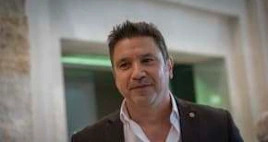

The justices repeatedly returned to the breadth of the police request for the full footage, with Isaac Amit suggesting that a demand for everything risked resembling a “fishing expedition."
The High Court of Justice on Monday heard journalist Omri Assenheim’s appeal against lower-court rulings ordering him to hand over raw footage from his interview with Eli Feldstein to the police, in a case that has quickly become a broader test of the scope of journalistic privilege in Israel. The panel hearing the case consisted of Supreme Court President Isaac Amit and Justices Alex Stein and Khaled Kabub.
At the center of the hearing was the question of whether journalistic privilege applies only to the identity of a source, as Israeli case law has traditionally recognized, or whether it can also extend to unpublished material and raw reporting footage left off the cutting-room floor.
The discussion in court suggested that the justices were open to a broader understanding of the privilege, while also expressing skepticism toward a framework in which the journalist alone decides what is relevant, what is protected, and what may never be reviewed.
The dispute stems from Assenheim’s KAN 11 interview with Feldstein, in which Feldstein said that Tzachi Braverman, Prime Minister Benjamin Netanyahu’s chief of staff, met with him at the outset of the investigation into the classified document leaked to the German newspaper Bild and implied that he could make the matter disappear. Following the broadcast, police opened an investigation into the so-called “midnight meeting.” Braverman denies wrongdoing.
The justices repeatedly returned to the breadth of the police request for the full body of raw footage. At one point, Amit suggested that a demand for everything left on the editing-room floor risked resembling a “fishing expedition.”

At the same time, the court also pressed Assenheim and his lawyers on why they had refused a narrower mechanism under which the material would first be reviewed by the court itself, with judges - not police and not the journalist alone - determining what, if anything, could be disclosed.
That was also the general direction taken by the district court, which rejected the appeal but sought to draw a more limited path regarding material claimed to have been given off the record.
Assenheim, through his attorney Liat Bergman-Ravid, argued that forcing journalists to turn over raw interview materials to police would seriously damage the ability of reporters to conduct in-depth interviews and build trust with sources and interviewees.
Concerns of interviewee hesitancy
The fear of a chilling effect on investigative journalism ran through the hearing and was echoed by media organizations and press-freedom advocates who appeared before the court. The concern, in essence, is that once interviewees believe unbroadcast material may later be requisitioned by law enforcement, many will simply stop speaking openly to journalists at all.
The state, representing the police, argued in response that this was an unusual case, not an ordinary demand for journalistic materials.
Its position was that Feldstein - a suspect and defendant in related proceedings - had chosen to speak on camera, openly and by name, about live criminal matters, and that investigators could not reasonably ignore the possibility that the unpublished portions of that interview contained information relevant to an ongoing inquiry. On that view, the case required a different balance between investigative necessity and press protections.
The broader background is the Bild affair, centered on the leak of a classified IDF document to the German newspaper as part of what investigators have described as an effort to influence public discourse surrounding the hostage deal and the war.
Feldstein is one of the central figures in that case, and the interview he gave Assenheim became, from the investigators’ perspective, not just a journalistic event but a potentially significant evidentiary link touching both the Bild case and the later “midnight meeting” investigation involving Braverman.
No ruling was issued at the end of Monday’s hearing. But the exchange in court suggested that the justices may be looking for a middle course: not recognition of an absolute privilege over journalistic raw materials, but also not an automatic rule requiring reporters to surrender unpublished footage whenever investigators ask.
If that is where the court ultimately lands, the Assenheim case could reshape the boundaries of journalistic privilege in Israel well beyond the immediate Feldstein interview.
latest_posts
- 1
 Former 'Bachelorette' welcomes 1st baby via emergency c-section
 - 2Conquering Language Boundaries: Individual Accounts of Multilingualism
- 3Why some African countries are prone to military takeovers
- 4Misinterpretations and Mistakes Portrayed by Hollywood in the General set of laws
- 5Uranus's small moons are dark, red, and water-poor


- Step by step instructions to Contrast Lab Jewels and Regular Ones
- Vote in favor of your Favored kind of footwear
- Research institutions tout the value of scholarship that crosses disciplines – but academia pushes interdisciplinary researchers out
- Vote in favor of the subject that you see as generally captivating and intelligent!
- Thousands of Walgreens nasal spray bottles recalled. See which ones.
- Tanzania president remorseful over internet shutdown on election day
- The race to mine the moon is on – and it urgently needs some clear international rules
- Instructions to Decide whether a Fender bender Legal counselor is Required for Your Particular Case
- Nigeria police charge Joshua driver with dangerous driving over fatal crash


